



In the rapidly evolving global technology landscape, Huawei has emerged as a leading innovator and a formidable competitor. Its sustained growth and international success are not accidental but are deeply rooted in strategic foresight and disciplined execution. A critical component of Huawei’s leadership approach is its sophisticated use of benchmarking techniques to assess performance, drive innovation, and maintain competitive advantage. By systematically analyzing internal capabilities against industry leaders and best practices worldwide, Huawei’s leaders ensure continuous improvement and long-term resilience.
One of the primary benchmarking strategies employed by Huawei is competitive benchmarking. This involves comparing key performance indicators (KPIs) such as R&D investment, time-to-market, product quality, and customer satisfaction with those of top rivals like Apple, Samsung, and Ericsson. Huawei’s leadership uses this data to identify gaps and opportunities, enabling targeted improvements in operations and strategy. For example, when Huawei observed that competitors were outpacing them in smartphone camera technology, they intensified their collaboration with Leica and significantly increased R&D spending in imaging systems. This competitive analysis allowed Huawei to leapfrog from being a follower to a trendsetter in mobile photography.
Beyond direct competitors, Huawei applies strategic benchmarking, which focuses on broader organizational models and long-term strategies. Leaders at Huawei study companies across industries—such as Toyota’s lean manufacturing system or Google’s open innovation culture—to extract transferable insights. This cross-industry learning helps Huawei refine its own management frameworks. A notable example is Huawei’s adoption of a decentralized decision-making model inspired by military command structures and agile enterprises. By empowering regional managers with greater autonomy while maintaining alignment through shared values and metrics, Huawei enhances responsiveness without sacrificing control.
Another cornerstone of Huawei’s benchmarking approach is process benchmarking. The company meticulously analyzes workflows in areas such as supply chain logistics, software development cycles, and customer service protocols. Using tools like Six Sigma and Lean methodologies, Huawei identifies inefficiencies and benchmarks its processes against global standards. For instance, after benchmarking its supply chain operations against Amazon and Dell, Huawei implemented just-in-time inventory systems and real-time demand forecasting models. These changes reduced lead times and improved delivery accuracy, contributing to stronger customer retention and lower operational costs.
Huawei also places strong emphasis on performance benchmarking at the individual and team levels. Through its rigorous performance management system, employees’ outputs are regularly measured against predefined benchmarks tied to innovation, productivity, and customer impact. High-performing teams are studied and replicated across departments—a practice known internally as “best practice sharing.” This internal benchmarking fosters a culture of excellence and healthy competition, where success is not only recognized but systematically scaled.
A unique aspect of Huawei’s benchmarking strategy is its integration with long-term scenario planning. Senior leaders do not limit benchmarking to current market conditions but project future industry trends and prepare accordingly. By engaging in environmental scanning and collaborating with academic institutions and think tanks, Huawei anticipates technological shifts such as 5G adoption, AI integration, and quantum computing. They then benchmark their capabilities against hypothetical future leaders in these domains, allowing them to invest early in emerging technologies. This forward-looking mindset was evident in Huawei’s early dominance in 5G infrastructure, achieved years before widespread commercial deployment.
Moreover, Huawei leverages digital benchmarking platforms to enhance the speed and accuracy of its analyses. The company employs advanced data analytics, artificial intelligence, and machine learning algorithms to process vast amounts of internal and external data. These tools enable real-time comparisons across regions, product lines, and functions, providing leaders with actionable insights. For example, AI-driven dashboards allow executives to monitor R&D efficiency metrics across different labs and instantly identify underperforming units for intervention.
Despite operating in a highly regulated and politically sensitive environment, Huawei maintains transparency in its benchmarking goals internally. Leaders communicate clearly how benchmarks align with the company’s vision of “building a fully connected, intelligent world.” This alignment ensures that benchmarking is not seen as a mere compliance exercise but as a strategic enabler. Employees understand that meeting or exceeding benchmarks contributes directly to Huawei’s mission and global competitiveness.
However, Huawei’s benchmarking practices are not without challenges. Geopolitical tensions have restricted access to certain Western technologies and markets, complicating direct comparisons with U.S.-based firms. In response, Huawei has adapted by increasing reliance on domestic innovation and forming strategic partnerships within Asia and emerging markets. This shift has led to a new form of resilience benchmarking, where the focus is on self-reliance, supply chain redundancy, and ecosystem independence.
In conclusion, Huawei’s leadership has institutionalized benchmarking as a core strategic discipline. Through competitive, strategic, process, and performance benchmarking—supported by digital tools and future-oriented planning—Huawei continuously refines its operations and strengthens its global position. What sets Huawei apart is not just the technical sophistication of its benchmarking methods, but the cultural commitment to learning, adaptation, and relentless improvement. As the global tech industry faces increasing complexity and disruption, Huawei’s approach offers a compelling model for how organizations can use benchmarking not merely to keep pace, but to lead.
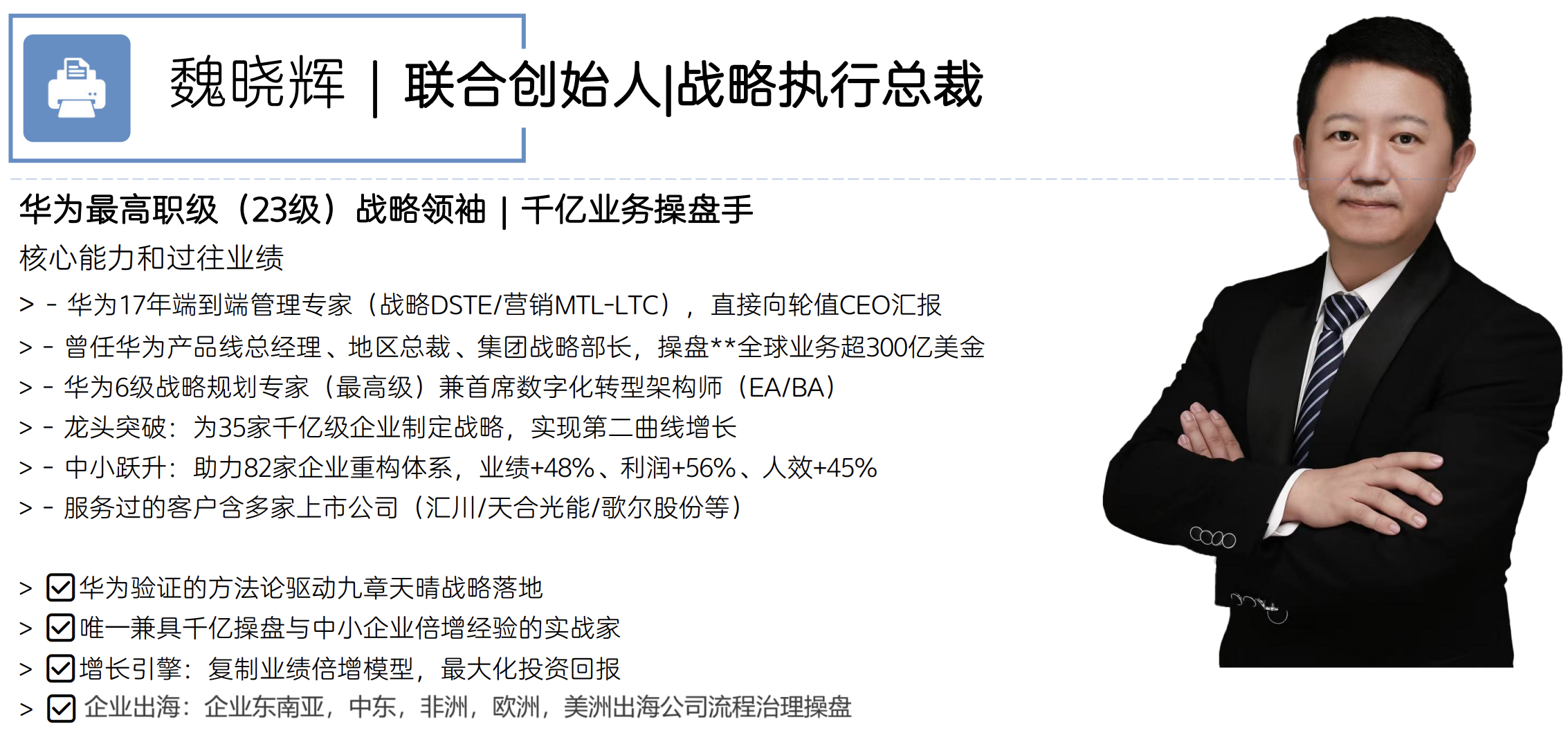
点击链接或者扫码注册就能赚钱,数字经济谁先注册,下线就为谁赚钱,介绍服务费
智谷AI名片 无需下载注册就送红包
抢占,卡位,抢占先机,抢开数字门店需要激活码,可以留言
想赚更多钱,想了解详情,请下载,或者留言,一对一沟通,或者参加培训

深圳市马市特吉科技有限责任公司 Copyright © 20024-2026
微信扫码添加我


